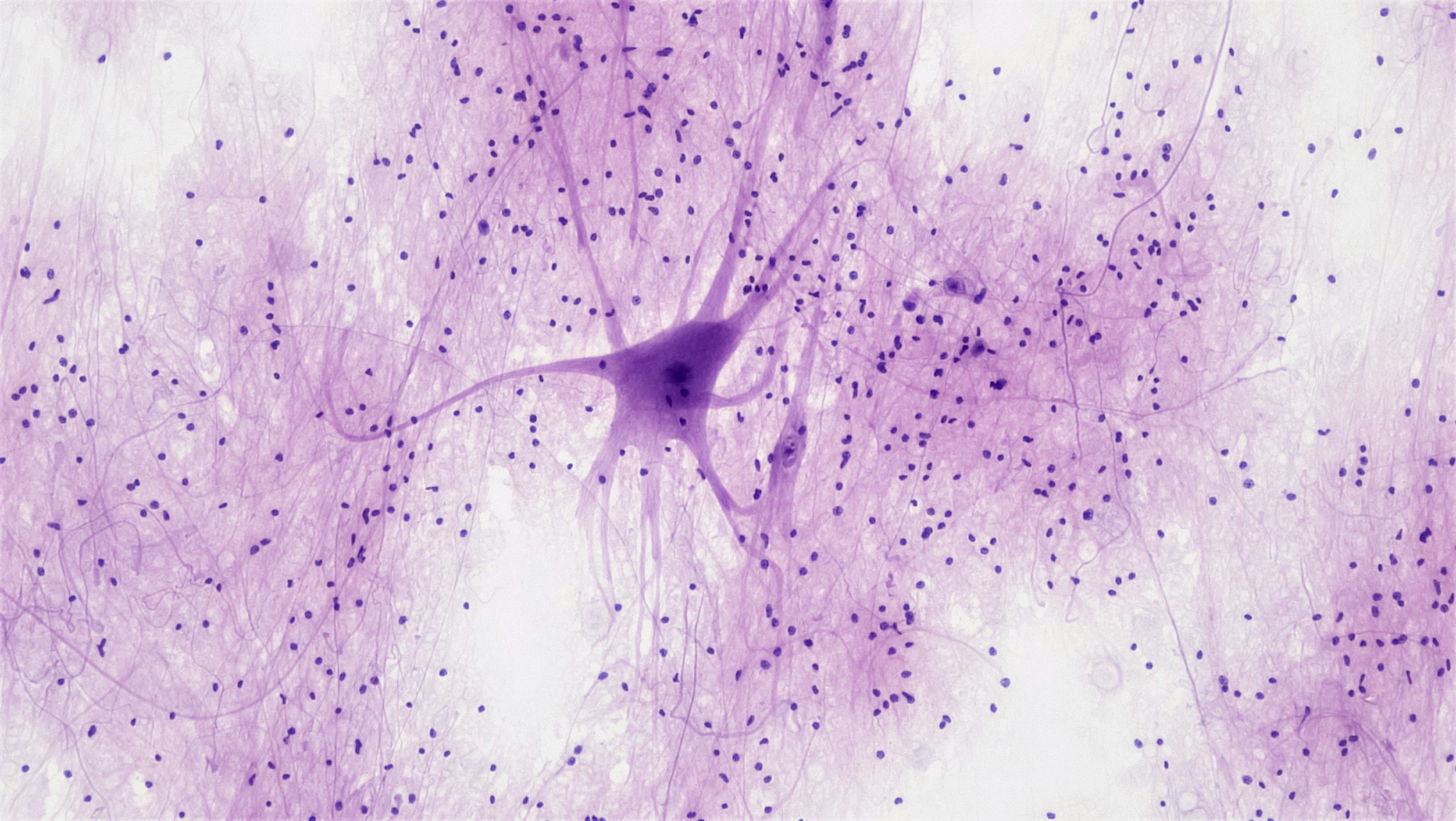
Modern biology generates data at every scale — molecules, cells, tissues, patients — through every modality you can imagine. Our goal is the AI methods that integrate all of it together, quantify what they don’t know, and arrive in working scientists’ hands as installable tools.
The four methodological pillars
Four commitments that shape every method we build, every paper we write, and every tool we ship.
PILLAR 01
Posterior models that quantify what they don’t know.
We design AI models like scientific instruments — knowing what they do and what they don’t. Our methods return posterior distributions, not single guesses, with calibrated confidence. The architectures behind this (variational autoencoders, hierarchical VAEs, Transformers, diffusion and flow models, state-space models) serve that end.
PILLAR 02
A common language across modalities.
Biology is one thing; the way we measure it is fragmented. We build multimodal latent representations where microscopy, sequencing, spatial omics, and health records can be read alongside each other. The most interesting biological answers live in the seams between modalities — and the methods to read those seams haven’t been built yet.
PILLAR 03
Models you can interrogate and trust.
Predictive accuracy alone isn’t enough for biomedicine. Predictions must be calibrated, interpretable, and able to point scientists at the most informative parts of their own data. We embed uncertainty quantification and explainability from the start — and develop the metrics to measure when we’ve succeeded.
PILLAR 04
Methods that biologists actually use.
A method that lives only in papers changes very little. A method a biologist can install, run, and trust changes how science is done. We invest in professional research software engineering so every method becomes a FAIR-compliant, installable tool — supported by people who answer when something breaks.
The long view
“Over the coming decades, AI will mature into an indispensable partner for biologists — not replacing them, but helping them navigate unfathomable amounts of multimodal data. By 2050, initiatives like AI Virtual Cells will serve as proving grounds for what AI can — and cannot — do in the life sciences.”
The methodological focus of MAIAS — posterior modelling, multimodal latent representations, and cross-scale integration — is the foundation for that transition.